Baristas offered the loyalty card 1.5× more often
During the pilot at one coffee shop, Lansy AI reviewed every guest conversation at the counter against the chain’s own standard. Baristas offered the loyalty card 1.5× more often, and the average check grew.
1.5×
loyalty card offers from baristas
+10.5%
items per order
+5%
average check
Pilot at one coffee shop; the figures are from the first week of the pilot. Lansy AI reviewed every guest conversation at the counter against the chain’s standard.
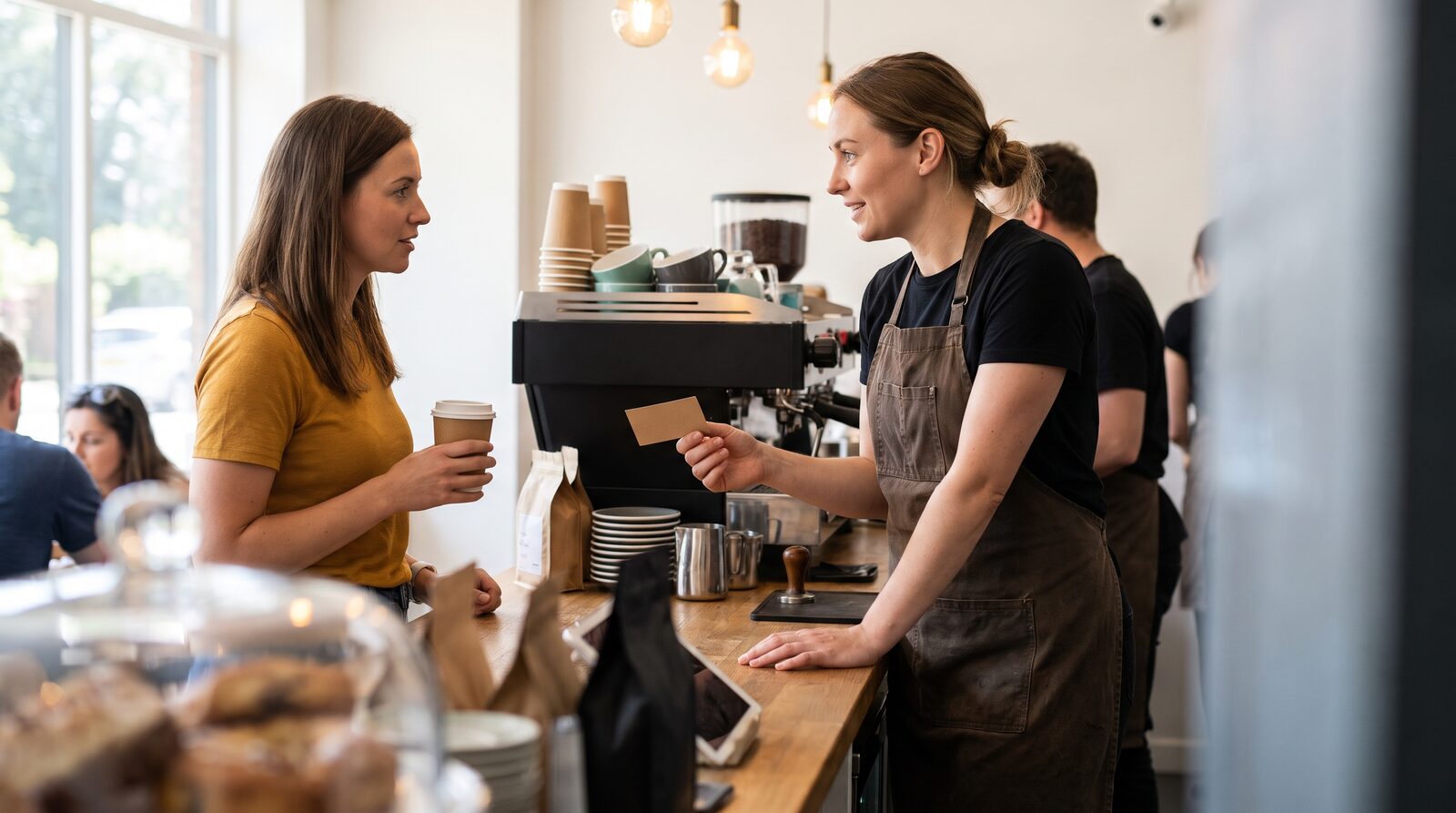
A large coffee chain
- Size
- Over 200 coffee shops
- Formats
- Six, from a kiosk to a cafe with seating
- Kitchen
- Its own kitchen and espresso blend
- Training
- In-house barista training center
- Scripts
- Greeting, speed, upsell, cross-sell, retention phrases
- Analytics
- Check and conversion by location, from the POS
- In the pilot
- One coffee shop
The chain started with coffee to go in office buildings, then added kiosks, corners, and coffee shops with seating. A co-founder describes its niche as “quality coffee at an affordable price and food that’s easy to take with you.”
The scripts and the training center work: baristas know what to offer guests and how. The POS shows a manager the shift’s revenue, but not who offered the loyalty card and who silently rang up the drink the guest asked for.
A good conversation still skipped the seasonal drink and the loyalty card
What the chain could not see before the pilot
Mystery shoppers
One visit per shift was not enough for a chain this size. It stayed unclear where the team was doing well and where it could do more.
Other systems did not fit
Video and audio monitoring systems did not analyze what was said at the counter and cost more than a fifth of a location’s monthly revenue to run.
Sales data says nothing about service
The receipt lists the items, but not whether the barista offered them or the guest asked. The chain needed a review of every conversation and reports on upsells and the seasonal menu.
One real order from the pilot, one minute long: a flat white with coconut milk, rice porridge, and nuts. The barista offered alternative milk and a dessert, and explained why the dessert pairs with the drink. Two things were missed. The barista did not suggest a seasonal drink instead of the classic flat white, and did not offer the loyalty card after learning the guest had none.
Lansy AI was configured with the chain’s own training materials
A microphone at the counter records the conversations. The scripts, the training center’s methods, and the supervisors’ checklists became the criteria, and the reports focus on what matters to the chain: loyalty, featured items, and the seasonal menu.
Training center materials
Scripts, standards, and shift criteria. The model tells a lively conversation from one at risk of going sour.
Reports for the chain’s goals
Separate views for the loyalty program and the key menu items: what a manager tracks every day.
A test at one location
A week with a review every day. The manager reads the reports daily and sees what to change in the team’s work.
The chain’s standard has five groups of criteria: presentation, upsell, loyalty card, closing, and communication. Each group splits into points. Upsell, for example, is scored on the attempt, the technique, the add-on, and the switch from a classic drink to the seasonal menu.
Each barista saw their own orders, and the manager saw the whole shift
After the shift, Lansy AI reviews the conversations. The manager sees the location dashboard and can ask the AI assistant about the team.
A review of every shift
Scores against the chain’s criteria, quotes from the conversation, and personal suggestions for the next shift.
A location or barista dashboard
The check, items per order, and who offers the card and the featured items, by barista or by shift.
Every coffee shop in one view
Where the standard holds and where it dips. Examples for training are picked from here.
Flat white with coconut milk, rice porridge, and nuts
Barista · 1 min · Drink + food
Overall score
8 /10
Criteria met
12 / 15
Upsells
4 / 5
Loyalty card
1 / 2
Communication
5 / 5
Summary
The guest ordered a flat white with coconut milk, porridge, and nuts. Strength: active upselling with well-phrased reasons for the choice. Room to grow: offering a seasonal drink when the guest orders a classic, and taking the loyalty card conversation through to sign-up. Friendly and efficient service.
Episodes of the conversation
- 00:30 – 00:51Alternative milk upsell“Which milk would you like? Almond, coconut?”
- 00:43 – 00:47Presentation“Try our nuts with white chocolate and almond, they go well with your flat white.”
- 01:01 – 01:08Loyalty card“Are you in our loyalty program?”
- 01:10 – 01:16Closing“By card?”
Criteria of the chain’s standard
The guest ordered a classic coffee drink, and the barista did not suggest anything from the seasonal menu.
“Can I have a flat white, please?”
Better approach
“For coffee with milk, try our new seasonal drink instead of the classic: a milky taste with notes of salted caramel and white chocolate. Shall I make one for you?”
The guest answered “I don’t come here that often,” and the barista did not offer to sign them up for the loyalty card.
“Are you in our loyalty program?”
Better approach
Offer the card even to a first-time guest: “It takes a minute, and from your next order you start collecting points. Shall we set it up?”
The same review lists the strengths. The barista offered alternative milk unprompted and gave the dessert a reason: it pairs with the flat white.
Week by week, the reviews build up into a profile of each barista: eight competencies of the chain’s standard, this week against the previous one, and an AI mentor’s advice on what to say differently.
A barista’s competencies, this week against the previous one
eight competencies of the chain’s standard, 0–100%
Closing
68%70%
Greeting
52%70%
Upsells
58%60%
Loyalty card
95%100%
Presentation
48%40%
Emotional tone
79%80%
Needs discovery
13%20%
Communication
89%90%
One barista’s profile from the pilot. This barista already offered the loyalty card almost every time; greeting and needs discovery grew the most, and presentation slipped and is the first thing to practice.
Closing. The barista repeats the order before payment for about one guest in four over 28 days, a little more often this week.
“Cappuccino with coconut milk and a sandwich, right?”
Better approach
Repeat the order briefly before payment.
Loyalty card. A strong base to keep.
Better approach
Ask about the card before the final payment, so the payment does not have to go back a step. This matters most at rush hour, when every extra question slows the line.
Presentation. Description quality works in fewer than 4 cases out of 10 over 28 days.
“Pear and ginger latte: soft, creamy, with a light spice.”
Better approach
Describe a drink by its taste, not only by its name.
Emotional tone. Calm and even.
“A really tasty pairing.”
Better approach
Keep the calm tone, but give recommendations more color, such as “a soft, creamy taste.” It makes the offer sound alive rather than technical.
Needs discovery. Open questions work for about one guest in four over 28 days, so there is plenty of room to grow.
“Would you like it stronger or milder?”
Better approach
Instead of ringing up the basic drink right away, ask one open question.
How the team took it
Wariness
Every conversation is recorded. At first that feels strange; then Lansy AI turns into a helper.
First reports
Each barista gets their own report with the misses explained and clear areas to grow. The manager gets the shift’s facts in one summary.
First week
The check and the items per order grew. The manager works from data, not guesses.
Items per order and the average check grew, and the shift reviews show why
Baristas offered the loyalty card more often, guests added more items to their orders, and the average check grew 5%. The shift reports also showed where the growth came from.
The card is offered more often
Before the reports, no one could see who actually told guests about the program and who forgot.
Porridge and egg sandwiches sold without an offer
They reached the order only when the guest asked. Baristas rarely offered them, and the plan for these items was not met. The conversation reports showed it in the first week.
Syrups and alternative milk come up more often
The shift reports show which baristas offer add-ons and which do not.
“We have been testing the system for a month. Lansy AI works like a flashlight: it shows where the team can grow. We can see almost in real time how the team works and whether the standards are followed. The system does not raise sales by itself. It helps a manager see where the team falls short.”
Rolling out across the chain
After the test at the first coffee shop, the chain decided to use Lansy AI at every location: shift reviews for baristas and location dashboards for managers, with the same criteria everywhere.
See how Lansy AI reviews your team’s conversations
In the demo, Lansy AI reviews conversations against your criteria and picks out the moments worth discussing with the team.